Introduction
We've all heard the horror stories. You spend three weeks designing a website, writing copy, or consulting for a new client. You send the final deliverable, issue the invoice, and then... they ghost you. Your emails bounce, their phone goes to voicemail, and you're left with nothing but wasted time.
Working without an upfront commitment is the most dangerous gamble a service provider can make. The solution is remarkably simple, yet thousands of freelancers avoid it because they feel "awkward" asking for money before the work is done: the deposit invoice.
In this guide, we'll look at why you must send a deposit invoice, how to calculate the perfect upfront percentage, and how to structure the document so clients happily pay it.
Why a Deposit Invoice is Non-Negotiable
A deposit invoice (often called a proforma invoice or an upfront bill) is a request for a partial payment before any work commences. Asking for money upfront serves three critical purposes:
- It validates the client. If a client refuses to pay a reasonable deposit, they were going to be a nightmare to collect from at the end. Consider it a cheap red-flag detector.
- It covers your hard costs. If you need to buy software licenses, travel, or hire a subcontractor, the deposit funds this without draining your personal account.
- It creates psychological buy-in. When a client has financial skin in the game, they reply to emails faster and provide feedback quicker.
How Much Should You Ask For?
There is no universal law for deposit amounts, but there are standard industry frameworks you should follow.
| Project Size | Deposit Percentage | Best Used For |
|---|---|---|
| Small (< $1,000) | 100% Upfront | Consulting calls, quick audits, minor design tweaks. |
| Medium ($1k - $5k) | 50% Upfront / 50% on Delivery | Web design, copywriting packages, standard photography. |
| Large ($5k+) | 25% or 33% (Milestone Based) | Software development, ongoing marketing campaigns, construction. |
💡 Pro Tip: Never call it a "Down Payment." Use the term "Retainer" or "Initial Milestone." Down payment implies they are buying a product, whereas a retainer implies they are securing your highly sought-after time.
How to Structure a Deposit Invoice
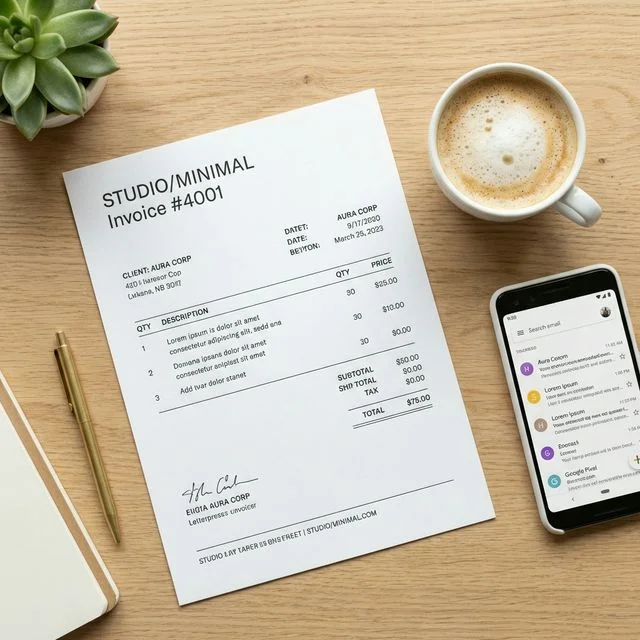
When you use an invoice generator for upfront payments, you need to make the math incredibly clear to avoid confusion later.
- The Total Scope: List the full price of the project (e.g., $4,000).
- The Line Item: Add a line item specifically named "50% Upfront Deposit to Commence Work."
- The Current Due: Make sure the total due on THIS specific invoice reflects only the deposit amount (e.g., $2,000).
When you send the final invoice later, you will list the total $4,000, add a negative line item for "Deposit Paid (-$2,000)", leaving the remaining balance.
Common Mistakes with Deposit Invoicing
- ❌ Mistake: Starting work while the deposit is "in the mail."
- ✅ What to do instead: Make it a hard boundary. "I'll schedule your kickoff call as soon as the deposit invoice clears."
- ❌ Mistake: Making deposits fully refundable.
- ✅ What to do instead: State clearly on your invoice: "Deposit is non-refundable to secure calendar booking."
FAQ Section
What is a proforma invoice vs a deposit invoice?
A proforma invoice is essentially an estimated bill provided before goods are shipped or services are rendered; it acts like a quote. A deposit invoice is a demand for actual, immediate partial payment.
Can I make an invoice for advance payment?
Yes. Simply use an advance payment invoice generator template, list the project details, and specify the upfront percentage required to begin work.
How do I ask a client for a deposit without sounding rude?
Frame it around their success. "To officially secure your spot in our production schedule and begin work on Monday, please process the initial 50% deposit invoice attached."
Key Takeaways
- Deposit invoices weed out bad clients and protect your cash flow.
- Charge 50% upfront for medium projects, and 100% for anything under $1,000.
- Never start working until the deposit hits your bank account. No exceptions.
Conclusion
Here's the bottom line: asking for a deposit isn't awkward—working for free is. When you send a crisp, professional deposit invoice, you establish yourself as an in-demand expert.
Stop taking unnecessary risks with your time. Use our free Invoice Generator today to create a stunning deposit request and secure your next big project.